Step 1 of 3
Come Experience It.
Before applying to a training cohort, you attend at least two free Empathy Circle Cafes. No registration. No commitment. Just come and feel what it's like to be truly heard.
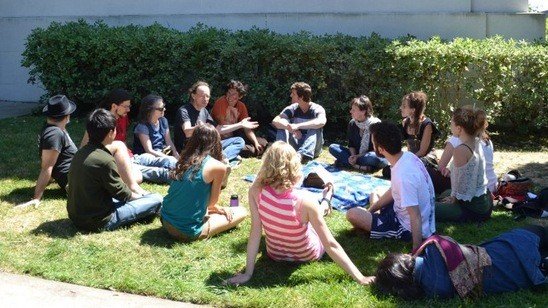
Before applying to a training cohort, you attend at least two free Empathy Circle Cafes. No registration. No commitment. Just come and feel what it's like to be truly heard.
An Empathy Circle is a structured, mutual listening practice rooted in Carl Rogers' active listening — also known as reflective listening. Rather than teaching empathy as a concept, it creates the lived experience of it.
Each person takes a turn as both speaker and listener. The listener's only job is to hear what was said — and reflect it back. Not to advise, fix, or respond. Just to witness. The speaker feels heard, often for the first time in a long time.
Participants consistently describe leaving feeling lighter, more connected to others, and more present to themselves. The effect is simple and surprisingly profound.
You need to experience the practice as a participant before you can facilitate it for others. Two sessions gives you enough feel for the circle to know whether facilitating it is right for you.
Shares whatever is present — feelings, thoughts, experiences. They continue speaking until they feel fully heard and satisfied.
Reflects back the essence of what the speaker said — not the words, but the meaning and feeling. Checks: "Did I get that?"
The rest of the circle listens fully without speaking — practicing deep attention and receiving the experience of others.
Explains how to participate in the empathy circle. Watches that roles are kept, gently intervenes when needed, keeps time.
Speking turns are timed so that all participants get the same amount of time. Everyone gets to speak, listen, and witness. The circle creates mutual care and equal voice.
First time is always a little unfamiliar. Here's exactly what happens.
You join the Zoom room. A facilitator welcomes everyone, briefly explains the circle format, and answers any quick questions.
The facilitator walks through the simple "How To" instructions — usually takes 5 minutes. The process is straightforward.
Small groups of 3–5 people enter breakout rooms. Roles rotate every few minutes. You speak, you listen, you witness.
Everyone returns to the main room to share reflections. What did you notice? What surprised you? How did it feel?
Most Cafes run 60–90 minutes. Drop-in means you can come and go — though being present for the whole session is recommended.
You don't need to prepare a topic or think about what to say. Come as you are. The circle meets you there.
Drop-in sessions every week. No registration needed. Just click the Zoom link and join.
All upcoming Empathy Circles, Cafes, and Trainings — globally, updated in real time. Find a session in your time zone.
Times shown in Pacific (US). Convert to your time zone →
➕ Subscribe to CalendarMost people come skeptical. Most people come back.
I came to the first Cafe not knowing what to expect. Within 20 minutes I was in tears — not from sadness but from the shock of actually feeling listened to. I signed up for the training that same evening.
The format is so simple I was almost suspicious. But there's something about having another person reflect back exactly what you said — without adding their own agenda — that is genuinely rare. Deeply valuable.
I've been in therapy for years. This isn't therapy — it's something different. More peer-to-peer. The mutuality of it changes something. Everyone gives and receives equally.
You're ready to apply for a training cohort. Four Saturdays. 2.5 hours each. Free, by donation.